How Big is the International Space Station? Much More Than You Think…

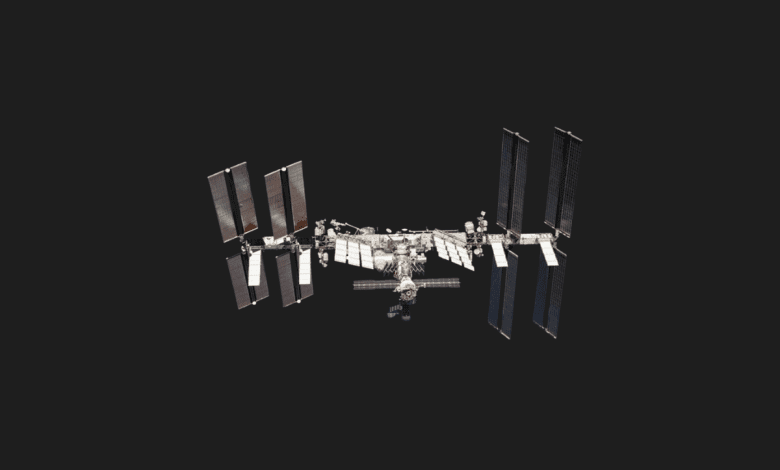

Although a large part of the ISS consists of solar panels, the pressurized living area resembles a jumbo jet cabin. But exactly how big is this massive spacecraft? Let’s find out…
When it comes to life in space and future space exploration, the first structure that comes to mind is undoubtedly the International Space Station (ISS), which has been in continuous use since 2000. However, just by looking at photos or artistic renderings, it is very difficult to grasp the true scale and scope of this colossal orbital laboratory. The ISS, which looks like a simple satellite from Earth, actually resembles a jumbo jet and has more living space than a six-bedroom house.
To understand the true scale of the ISS, which at first glance resembles a simple satellite, it is useful to compare its dimensions with structures on Earth. The station’s total length from end to end is just under 113 meters. In other words, the space station is longer than a FIFA-standard football pitch. The station’s exact mass is approximately 420 tons, which is equivalent to the weight of about two and a half empty Boeing 747 passenger jets. NASA conducted a total of 42 assembly flights to transport and assemble the station’s various large modules and other parts into orbit. Some of the largest modules are similar in size to independent satellites, such as the Hubble Space Telescope, which is 13 meters long. For example, the Russian Multipurpose Laboratory Module is about 12 meters in diameter. Therefore, instead of comparing the ISS to a single satellite, it is more accurate to liken it to a massive cluster of interconnected satellites.
The “Six-Bedroom House” in a Weightless Environment

Although the ISS gets much of its size from non-habitable equipment like solar panels, the living space inside is large enough to comfortably accommodate the crowded crew of astronauts. Approximately 65 meters of the station is pressurized, meaning astronauts can move safely within the microgravity environment. Also, due to microgravity, the use of an open flame is prohibited on the ISS.
The entire ISS consists of various interconnected modules, including docking adapters for arriving and departing spacecraft, airlocks for transitioning between modules, research modules for scientific studies, and rest areas. The total habitable volume across the working and living modules offers astronauts more room to move than a six-bedroom house.
The living quarters, where astronauts can sleep and spend their free time, include six bedrooms, two bathrooms, a gym, and a cupola that offers a 360-degree view of Earth and the stars. Some astronauts compare the interior living areas of the ISS to the cabin of a Boeing 747 aircraft. However, the most significant difference is that, unlike an airplane cabin, there is no need for floors due to the weightless environment. This causes the living areas to resemble a series of tubes and tunnels rather than corridors.


In short, the ISS can be defined not only as a scientific hub but also as the most ambitious and complex “home” ever built by humanity in space.
You Might Also Like;